Saturday, February 29, 2020

Week 7 Prompt: Hoax Memoirs


Prompt:
For our prompt this week, I want you to think about fake memoirs, author mills (James Patterson), and celebrity inspired book clubs. Basically write a readers' response to one of the articles you are reading for this week (see syllabus or links in this post for readings) - or talk about a time when a book or author that made headlines affected you personally or your work.

Article Referenced:
Somers, J. (2017, December 18). 5 Hoax Memoirs Still Worth Reading.  B&N Reads. https://www.barnesandnoble.com/blog/5-hoax-memoirs-still-worth-reading/

The hoax memoir is a topic of interest for me after a discussion that my book club had last year.  We read the memoir Maid by Stephanie Land and it led to one of the most thought-provoking discussions that our group has had to date.  Several members of our book club felt after reading the book that Land was an unreliable narrator given how many people in her life seemed to disagree with her perspective on various situations throughout the book. I didn’t share that same interpretation, but instead thought Land was a person who had made a series of bad decisions at a relatively young age then felt she didn’t deserve better because of her past mistakes and thus would sabotage any chances she had of making her life better. 

After reading about the hoax memoirs featured in our assignment this week, I reflected back on the discussion about Maid and how it might compare to the hoax memoirs outlined.  I especially looked at the parallels between Maid and A Million Little Pieces.  Assuming my fellow book club members were right and that Land embellished her story in a similar way that Frey did by exaggerating the most important details in her story, there is a still a great narrative to tell about the difficulty of raising oneself up out of poverty.  The stories in Land’s book detail the difficulties of obtaining government assistance when you’re a single parent in a low-paying job and the traps people fall into as they try to become self-sufficient.  As someone who has worked adjacent to many social service agencies helping people such as Land, I know the truths in her story and recognized that she suffered many of the struggles common to individuals working with social service agencies around me.  Much like Frey’s story, it seems there is a lot of valuable perspective to be found in Land’s story even if some of the story may have been fabricated to sell books.

Thinking about the decision to publish Land’s story from a pragmatic view, how does a publisher verify the account of a story when dealing with perspectives rather than facts?  Land’s story is primarily her own recollections which of course are tainted by her own perceptions of people and events. 

Given the nature of memoirs, I think all readers would be best served by approaching the genre in general as the author’s interpretation of how events unfolded and not as a piece of journalism.  Each of our memories has faults in it, and thus any story told based on our memories is likely to have factual errors.   While publishers still should have the onus of verifying a story as much as possible prior to publication, the fact of the matter is that readers should use caution before taking any memoir at face value and should always remember that a memoir is but one version of a story.

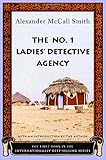
Mystery Annotation: The Ladies No. 1 Detective Agency


The No. 1 Ladies Detective Agency
by Alexander McCall Smith

Synopsis
After the death of her beloved father, Mma Precious Ramotswe decides to open her own business, a detective agency in her native Botswana.  She believes that ladies make the best detectives because the women “always know what’s going on.”  In the first novel in this popular series, Mma Ramotswe takes on a series of cases, including a paternity case, a missin husband case, a case involving a doctor who is sometimes competent and other times clueless, a case involving a father trying to figure out if his daughter is seeing a boy behind his back, and a missing boy who may have been captured and killed by witch doctors.

Elements of Mystery
-          Story Line: The No. 1 Ladies Detective Agency follows the opening of Mma Ramotswe’s business and the first few cases that are brought to her.  The series of mysteries in the story focus on cultural issues assumed to be prominent in Botswana based on the narrative of the story – adultery, children who disobey their parents, con men, and witch doctors.  As the first book in the series, a good deal of background information about the characters in included in the story as well.
-          Characterization: Mma Ramotswe is the central figure in the story, and early on we learn about her failed marriage to an abusive musician and the death of her only child, both of which shape the woman she is today.  Many secondary characters are introduced and factor into the story in various degrees, and it can be assumed that several of these characters were introduced in the first novel of the series to be recurring characters.
-          Frame/Setting: The frame and setting of this novel are crucial to its appeal.  McCall Smith spends a great deal of time introducing Botswana and African culture to the reader.  Detailed descriptions of the landscapes, buildings, and people help to paint a vivid picture for the reader and create an intricate background for the story.  Cultural details, including details about food and drink as well as detailed descriptions about transportation in the nation, help add to the framing of the story.  
-          Tone:  The No. 1 Ladies Detective Agency is a cozy mystery with a gentle tone.  Although there are definitely some uncomfortable topics broached, including abuse and kidnapping, the tone is matter-of-fact and leaves out most of the gory details.  Throughout the story, there is a feeling that all will be made right and justice will be served.
-          Language/Style: McCall Smith uses language to help enhance the setting and tone of the book.  The language has a distinctly African feel and the lightness of the tone helps to make it a cozy mystery.  The style is simple and no-nonsense, evocative of the Botswanan culture.
-          Pacing: The book has a leisurely pace as the author spends a great deal of time on setting and building characters.

Read-a-likes
The Unexpected Inheritance of Inspector Chopra by Vaseem Khan
Recipes for Love and Murder, A Tannie Maria Mystery by Sally Andrew
Killed at the Whim of a Hat by Colin Cotterill

Saturday, February 22, 2020

Week 6 Prompt: Integrated Advisory

To: Mr. Smith, Head Librarian
From: Librarian Rachel
Date: February 22, 2020
Re: New display idea featuring romance

Mr. Smith -

I wanted to share an idea I had after our discussion last week about promoting our romance collection.  As you are aware, spring break is about a month away, and lots of our patrons are planning vacations.  I think we should create a spring break themed display featuring romance materials set in popular spring break locations people may be visiting or dreaming of visiting.  We could include relevant books, movies, graphic novels, and books on CD in the display.  We can also create and include placeholders with information for relevant eBooks and audiobooks for those patrons who might only want to check out digital materials because they're flying.  We could give each title a card that includes the location/setting for each book, a "spicy" rating so readers can find the level of steaminess for their comfort level, as well as recommendations such as "Recommended for readers who liked the television show 'Friends'."  If you think this idea would work, I'm happy to start pulling a list of titles I think we should include.

Thank you,
Rachel 

Thursday, February 20, 2020

Romance Annotation: "The Wedding Party" by Jasmine Guillory


The Wedding Party
by Jasmine Guillory

Synopsis
Maddie Forest has never been a fan of her best friend Alexa’s other best friend and co-worker, Theo Stephens.  He’s uptight, arrogant, and worst of all, he clearly has a disdain for her and her choice of career as a personal stylist. When the two find themselves at Theo’s apartment after a night of drinking, they end up spending a passionate night together.  Not quite ready to go back to being enemies, the two make an agreement to continue with a secret affair, but with conditions: Alexa cannot know they’re sleeping together and their physical relationship ends after Alexa’s upcoming wedding.  Things turn complicated quickly when Alexa asks both Maddie and Theo to be in her bridal party, and the two find themselves spending more and more time together.  As real feelings start to develop between the two, can they get past their first impressions of each other and can something that starts as purely physical evolve into something more?

Elements of Romance
-          Tone: Romance novels create a feeling of togetherness, support, and deep bonding.  Maddie and Theo both have strong positive relationships with their best friend Alexa and with their families (Maddie with her mother and Theo with his brother, Ben).  As they spend time together throughout the book, the two bond over similar upbringings and their struggles as minorities trying to forge successful careers. The book has an emotionally satisfying conclusion.   
-          Characterization: Maddie fits the description of the modern “everyday woman” typically found in the protagonists of most contemporary romance novels.  She is definitely independent and strong, starting her own business and often described as “stubborn” in the story.  Theo is depicted as an intellectual workaholic, and fits into the modern hero role of accepting his heroine as she comes.  Secondary characters are well-developed and tie into Guillory’s previous titles The Wedding Date and The Proposal and subsequent title Royal Holiday.
-          Story Line: The story, like all romances, primary focuses on the relationship between Maddie and Theo, starting with their first romantic moments and working through several obstacles before reaching its happy ending.  Current social issues are brought into the story through Theo’s role as a staffer in the mayor’s office and the lead characters discuss some of the challenges they face as minorities in the professional world.  Protagonists from other Guillory novels (Alexa and Drew from The Wedding Date and Carlos and Nik from The Proposal) are featured as secondary characters so readers can continue to follow their stories.
-          Language/Style: Guillory uses lots of witty banter between all the characters when creating her dialogue.  Her language invokes much of the millennial hesitation towards commitment as the two begin to develop feelings. Texts between characters are included when they are hiding their conversation from those in the same room as them.  Physical encounters are described with a mix of sensual and anatomic terms, and while things can get steamy, the focus quickly shifts back to the emotional aspect of their relationship.
-          Frame/Setting: Set in the Bay area of San Francisco in the current day, Guillory adds geographic and cultural details to the story, but most of the setting simply provides a background to the central romantic storyline.  The professional lives of both Theo and Maddie (and even some secondary characters) provide depth to the story and the characters as well as presenting obstacles to the happy ending.
-          Pacing: Like most romances, this is a fast-read story.  The banter between characters pulls the reader along, and the story builds towards the predicted outcome.  I read this book in two nights and stayed up late the second night because I couldn’t put it down.

Read-a-likes
The Unhoneymooners by Christina Lauren
The Bridesmaids Behaving Badly series by Jenny Holiday
The Hating Game by Sally Thorne

Saturday, February 15, 2020

Kirkus-syle Review: Catch and Kill by Ronan Farrow


Catch and Kill: Lies, Spies, and a Conspiracy to Protect Predators
by Ronan Farrow

In this real-life thriller, Pulitzer Prize-winning journalist Ronan Farrow recounts the harrowing race to break the Harvey Weinstein sexual assault story and the obstacles he faced in getting the story to print.   As an investigative reporter at NBC News, Farrow was researching a story about the famed Hollywood “casting couch” when he began to uncover multiple allegations of sexual assault against producer Harvey Weinstein.  Determined to bring the truth to light about Weinstein, Farrow worked tirelessly to gain the trust of Weinstein’s alleged victims in order to gather stories and evidence of the string of sexual assaults of which Weinstein was accused.  Farrow encounters multiple obstacles while investigating the story, from sources hampered by nondisclosure agreements to stonewalling from his bosses at NBC News.  Motivated by his own childhood traumas, Farrow pushes forward with his reporting despite multiple warnings from sources to proceed cautiously.  Recognizing mounting evidence that he is being followed, Farrow realizes the lengths the wealthy and powerful producer will go to in order to silence and intimidate both his victims and those who look to expose him.  “Catch and Kill” gets its name from the unscrupulous tabloid tactic where a publisher will buy the rights to a story in order to bury it, a strategy Farrow discovers in his reporting that Weinstein likely utilized to silence at least one allegation.  After months of work assembling a story with several victims willing to go on the record, Farrow subsequently encounters yet another potentially devastating roadblock when NBC News decides to distance themselves from the story and from Farrow.  Determined to make public the evidence uncovered during his reporting and help to find justice for the victims, Farrow finds a new home for his story at the New Yorker magazine, but not without new threats and new pressures to get the story to print as rumors swirl that the New York Times is also working on a story about the Weinstein allegations.  Utterly engrossing, with compelling and thorough research layered into the riveting story of trying to break a news story against the clock while fighting against all odds.

A must read for understanding the abuse of power that led to the #MeToo movement and the take down of a Hollywood mogul.

Week 5 Prompt


Different publications review different types of books and they allow different types of conversations.  How does this affect collection development?
In a previous class about Collection Development, we learned about the importance of reviews in the selection process.  While Kirkus, Library Journal, Publishers Weekly and others are useful tools to the collection development librarian, there are many more review sources available, and a good librarian would have a knowledge of and utilize the review sources most relevant to their communities’ needs.

How do the two reviews for The Billionaire’s First Christmas compare and do you feel they are both reliable?  How likely would you be to buy this book for your library?
The two reviews for The Billionaire’s First Christmas both seemed to be written by the general public on purchasing or reviewing websites.  While I don’t think these reviews bring a professional critical perspective of the books, I think there is a place for reviews from a genre’s readers in the collection development process because the readers determine demand.  I think my purchase decision would be swayed by my library’s reading tastes – do they enjoy the cozy Christmas romance novel and is there a demand for similar books?  Likely, this would only be purchased upon request if there is available funding.

How do the reviews for Angela’s Ashes make you feel about the possibility of adding it to your collection?
Assuming I would be purchasing at the time of release, Angela’s Ashes seems like a prime candidate for purchasing multiple copies across various formats.  The positive reviews from various reviewers indicate a high likelihood of this book being a best seller that could attract readers of various genres.  The Booklist review even references the fact that word-of-mouth will likely create sustained demand for the book.  I’m old enough that I can remember when this book came out and how popular it was for many years after its release. 

Do you think it's fair that one type of book is reviewed to death and other types of books get little to no coverage? How does this affect a library's collection?  And how do you feel about review sources that won't print negative content? Do you think that's appropriate? If you buy for your library, how often do you use reviews to make your decisions? If not, how do you feel about reviews for personal reading, and what are some of your favorite review sources?
I have mixed feelings about some books getting a plethora of reviews while other books don’t.   Many times books with a lot of reviews deserve the attention, but in other cases, a book is overhyped for one reason or another, likely a large marketing budget or a well-known author or topic.  I would assume that in these cases, the demand for these books burns fast and quick and then once readers start talking, the demand dies and a library might be left with many copies of a book no one wants to read anymore.   While on the same hand, a book that might not have been reviewed in many places, if at all, may build an audience slowly by word-of-mouth and a library may be left scrambling to get copies as demand grows and patrons are requesting that book.

I am skeptical of review sources that won’t print negative content.  I think there is a way to be critical of a book while still respecting the author and the work, and I’ve seen many reviews that are able to walk that line with finesse.  There have been many books I’ve read over the years that were not highly acclaimed, but that doesn’t mean they don’t have an audience.  Likewise, I’ve read at least a handful of truly awful books where I wish I had read a truthful review earlier so I could have spared myself that experience.
I do not work in a library and have never bought for a library.  I do read some reviews for my personal reading, primarily from Goodreads and Amazon but also from blogs, social media, and other resources when I find them.  Overall, Goodreads is my go-to source for reviews as a casual reader, but I think that in order for Goodreads to be utilized most effectively, you have to put in the time to read a variety of reviews for each title and I try to read multiple reviews across all ratings to get a feel for why some readers liked a book while others did not.  Generally reading a variety of reviews helps me to develop a balanced opinion and determine whether it’s a good choice for me.  This can be time-consuming for a librarian having to review multiple titles to make purchasing decisions, so it’s not the most efficient method.  However, it can help a librarian who might be on the fence about a title to predict whether there would be patron demand for a title.

Saturday, February 8, 2020

Secret Shopper Assignment


I conducted my Reader's Advisory secret shopper assignment by visiting a new-to-me library looking for a historical fiction book.  My book club read Beneath a Scarlet Sky by Mark Sullivan last year and we all enjoyed it.  Therefore, my thought was to find another World War II novel but one based in another country.

While the library staff members I spoke with who were working that day were not well-read in the genre I chose, we were able to come up with a handful of titles that might work.  After some back and forth with additional criteria, we landed on The Alice Network by Kate Quinn and The Lilac Girls series by Martha Kelly.  She appeared to find these by running searches in the library's catalog system but I didn't get to observe her entire search to confirm this.  There was one part in the search where she tried to recommend a book she had read from a different time frame which was probably not the best move from a Reader's Advisory perspective but it is possible she was trying to see how set I was on a WWII novel.

Overall, I think my secret shopper experience was above average in service but I also think that she was able to cherry-pick recent titles popular in the genre and recommend those rather than trying to find a good fit.   I wish she would have asked more probing questions about the kind of book I was looking for and what I liked about Beneath a Scarlet Sky instead of going straight to best-sellers, but I think part of the reason she did not was the fact that she was mostly unfamiliar with the genre.  I also wonder what results she would have procured if she had referenced Novelist or another resource that gave a more direct path to read-a-likes. The staff members I interacted with were both friendly and helpful, but unfortunately just didn’t have a depth of knowledge in the genre for which I was seeking help. 

The titles that were recommended to me were ones I was aware of prior to my visit but they were not really familiar to me nor had I read them.  I would say my expectations were met but not exceeded as I was hoping to find something new and exciting.  I actually was able to find a book that she didn’t recommend while using my Goodreads account during our conversation that I think I will take to my book club to consider as well as it excited me more than the picks recommended.  I would probably go back to the desk for future recommendations if at this library, but I’m not sure I would drive to this library for a recommendation, unless I was looking for something in the fantasy, suspense, or true crime genres.  I think I would have had a truly great experience if my interest had better aligned with the staff members’ interests.

Sunday, February 2, 2020

Reader's Advisory Week 3 Prompt Response


1. I am looking for a book by Laurell K. Hamilton. I just read the third book in the Anita Blake series and I can’t figure out which one comes next!

I assume you just finished “Circus of the Damned,” which is the third book in the “Anita Blake: vampire hunter” series.  The fourth book in that series is titled “The Lunatic CafĂ©.”


2. What have I read recently? Well, I just finished this great book by Barbara Kingsolver, Prodigal Summer. I really liked the way it was written, you know, the way she used language. I wouldn't mind something a bit faster paced though.

Have you read “Where the Crawdads Sing” by Delia Owens?  Her writing is incredibly descriptive and focuses on the marshlands of the Carolina coast.   You might also like “Bloodroot” by Amy Greene.  It appears to have a faster-pace while still having a picturesque setting and lyrical writing.


3. I like reading books set in different countries. I just read one set in China, could you help me find one set in Japan? No, not modern – historical. I like it when the author describes it so much it feels like I was there!

“Memoirs of a Geisha” by Arthur Golden is set in 1930s Japan and is full of rich details about Japanese culture with lots of descriptions about the culture. 

4. I read this great mystery by Elizabeth George called Well-Schooled in Murder and I loved it. Then my dentist said that if I liked mysteries I would probably like John Sandford, but boy was he creepy I couldn't finish it! Do you have any suggestions?


“Well-Schooled in Murder” is part of the Thomas Lynley series by Elizabeth George and there are 20 novels in that series.  I can help you find more titles in that series if you’d like.  Or have you tried any of Louise Penny’s novels?  “Still Life” is the first in her Inspector Gamache series and it’s a popular series that has a lot of the same qualities as “Well-Schooled in Murder.”


5. My husband has really gotten into zombies lately. He’s already read The Walking Dead and World War Z, is there anything else you can recommend?

Has he read the “Day by Day Armageddon” series by J.L. Bourne?  The first book in the series is called “Day by Day Armageddon” and there are 4 books in the series as of now.   The series is advertised for fans of The Walking Dead and is written as one man’s journal during the zombie apocalypse.


6. I love books that get turned into movies, especially literary ones. Can you recommend some? Nothing too old, maybe just those from the last 5 years or so.

“The Rules of Magic” by Alice Hoffman is about three children growing up in the 1960s who come from a family of witches.   “The Song of Names” by Norma Lebrecht is about two men who are reunited after one, a violin prodigy, goes missing as a child on the day of his debut performance.  “The Strawberry Thief” by Joanne Harris is the sequel to “Chocolat” and continues protagonist Vianne’s story as she settles into her life in Lansquenet.


7. I love thrillers but I hate foul language and sex scenes. I want something clean and fast paced.

Are you okay with thrillers that may have Christian themes?  If so, you might liked the Nikki Boyd Files series by Lisa Harris.  The first book is titled “Vendetta” and features detective Nikki Boyd investigating a missing persons case similar to her own sister’s case that was never solved.


Second, after you get a chance to do the readings and explore Mary Chelton's list of tools, I want to hear about how you find books to read. It could be a site or a resource you've just discovered or one you've used for years, one you use for yourself or for your patrons or family and friends.

I find books using a variety of sources.  The most successful for me is GoodReads, as I have identified several friends who have very similar reading tastes as me, and if one or more of those friends has rated a book highly, there is a good chance I will enjoy it.  I also use GoodReads ratings and reviews to evaluate books I find elsewhere.  I follow many Twitter and Instagram accounts that share posts with new releases and popular book club picks in my feed (such as several publisher sites, independent book stores, public libraries, and book club feeds).  I also listen to several weekly podcasts about books, including “What Should I Read Next,” “The Stacks,” and BookRiot’s podcasts.  Last, but not least, I have a lot of luck just skimming the new releases section at my library and Target.  Since I lean more towards new releases, this works really well for me.   When I find a book that catches my eye, I’ll scan it with Goodreads and see the ratings and reviews to determine if it looks like it should be added to my To Be Read list (TBR).  A lot of the time, the book I’m currently reading is either determined by my book club’s pick or by what from my TBR has come up on holds from the library. 


The Lost Symbol
by Dan Brown
Synopsis
In the third book of the Robert Langdon series, the Harvard Professor of Symbology is summoned to Washington, D.C. to help his friend Peter Solomon, the head of the Smithsonian Institute and a prominent Mason. However, we quickly learn that Peter has been kidnapped and his captor has summoned Robert to the U.S. Capitol to help him unlock the secret path to uncovering the Ancient Mysteries. Robert has help from Solomon’s sister Katherine, a researcher in the field of Noetic Science, as they race across D.C. to save Peter and solve the mystery that is a core principle of Masonic Legend.   As Robert and Katherine race to save Peter, they consult a series of secondary characters, many of whom are faced with the dilemma of whether to save Peter or protect the secrets of the Masonic Lodge.

Elements of Suspense
-          Pacing: The story unfolds at a rapid pace with a narrow time frame. Early in this story, the villain gives a deadline, less than five hours away, for his demands to be met.  The majority of the story takes place in less than 12 hours, and there are some chapter that are flashbacks to previous events which is also a characteristic of suspense novels. Chapters are short and many end with mini-cliffhangers, adding to the drama.  As the deadline grows closer, the tension grows and the reader becomes more uneasy about how the story will end.  There is a final showdown between good and evil. 
-          Story Line: This story is defined by action and conflict, with many characters facing perilous situations throughout the story. There is a lot of violence and at least a handful of characters don’t survive.  
-          Tone: A dark and menacing atmosphere sets the tone for most suspense novels.  We learn early on that the villain in this story is a twisted soul and the book mentions an encounter with a stranger who calls him a “demon.”  It is a dark story, filled with gritty violence and a villain who is out for revenge.
-          Characterization: Professor Robert Langdon is a smart and skilled protagonist, a professor of symbology.  He is an everyman in many ways but also has a vast knowledge of secret societies and the use of symbols that make him a target for the villain.  Langdon’s character is not flushed out much, aside from a few details from his past that add to the suspense (being trapped in a well as a child that contributes to claustrophobia).  The villain fills a typical role of the evil counterpart to the hero.  Secondary characters are stereotypes.
-          Frame/Setting: The majority of the story takes place in Washington, D.C. and the descriptions and histories of the buildings in the story create a sense of another world than the one most visitors experience.  The story tells of secret rooms, passages, and underground levels that are not open to the public.
-          Language/Style: The use of symbology and the history of the city are used to ramp up the drama in the story.

Read-a-likes
The Templar Legacy by Steve Berry
The Atlantis Code by Charles Brokaw
The Plantation by Chris Kuzneski